01
What's Included in a Frameless Enclosure Installation?
hingeswall channeltempered glass
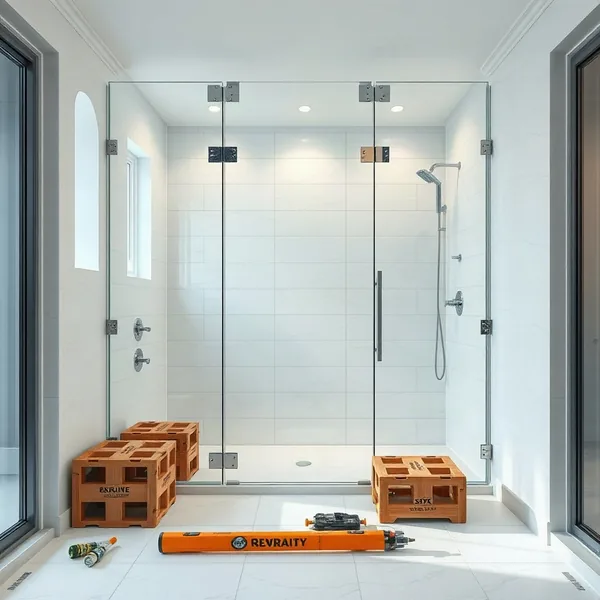
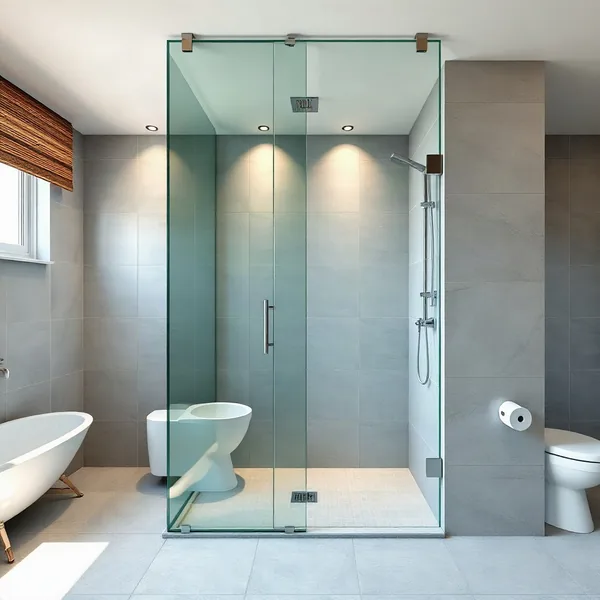
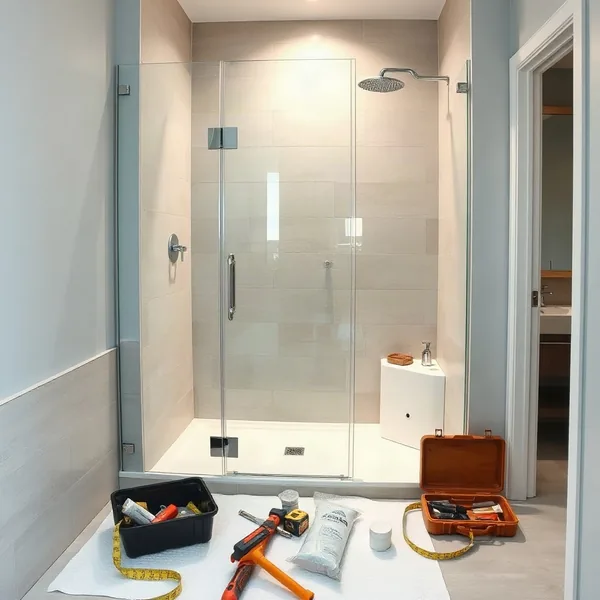
A frameless shower enclosure is a wet-zone boundary system made from structural glass panels supported by hardware rather than a surrounding metal frame.
Every installation we complete includes 8 mm or 10 mm tempered glass panels — toughened to comply with UAE safety standards — precision-set wall channels anchored into the tile substrate, and full-length or pivot-point hinges in your chosen finish. The wall channel carries the panel load and creates the primary seal point, so its correct alignment is more critical than most clients expect. We also apply a sanitary-grade silicone bead to every glass-to-wall and glass-to-floor joint before handover. Clients in Dubai who opt for our hydrophobic nano-coating add roughly AED 300–600 to the project cost but gain significant protection against the mineral scale that DEWA's desalinated water leaves on untreated glass.
02
Can You Build a Custom Frameless Enclosure for an Odd-Shaped Bathroom?
bespoke panelcorner layoutvilla bathroom
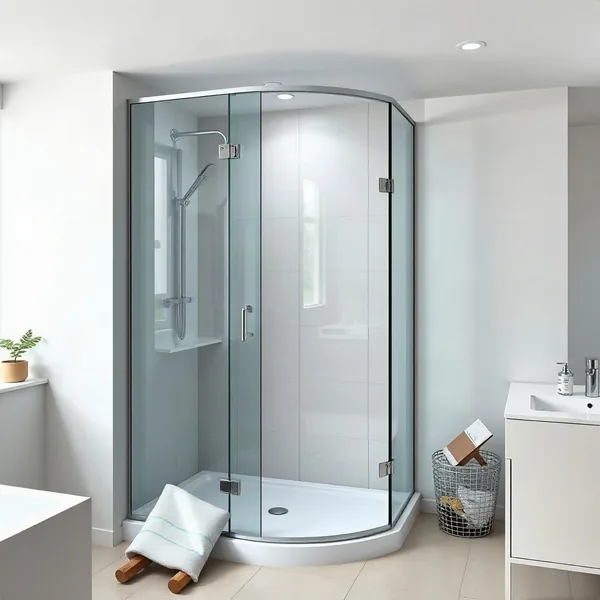
Custom frameless shower doors are standard practice for us, not a premium exception, because a large share of Dubai's villa and apartment stock — most of it built between 2000 and 2015 — features wet zones that no off-the-shelf unit can accommodate. An L-shaped corner layout, a slanted rear wall, or a recess set into a villa bathroom at an unexpected angle all require a bespoke panel cut to the millimetre. We take precise measurements during the site survey, produce fabrication drawings, and cut each panel to size before tempering — which means the glass cannot be adjusted after that point. Frameless glass shower enclosures for non-standard spaces typically add 7–14 days to the lead time. The result is an enclosure that looks designed for the room rather than squeezed into it.
03
Will It Leak? How Sealing Actually Works
silicone beaddrainage slopehumidity
Leaks in a frameless enclosure are almost always a sealing issue, not a glass defect.
A correctly applied silicone bead — neutral-cure, anti-fungal, sanitary grade — creates a watertight joint that outlasts the hardware when properly maintained. The substrate must be dry and clean before application; rushing this step is the most common cause of early joint failure. In Dubai, annual relative humidity regularly spikes above 90 percent during summer nights and early mornings, which accelerates mold growth on low-grade silicone and shortens seal life noticeably. We specify high-humidity-rated sealant on every project. Drainage slope also matters: if your wet-zone floor doesn't carry water consistently toward the drain, pooling at the glass base puts constant pressure on the bottom seal. If you do notice weeping after installation, the bottom channel joint is the first place to inspect.
04
What the Installation Day Looks Like
site surveyglass deliveryfitting crew
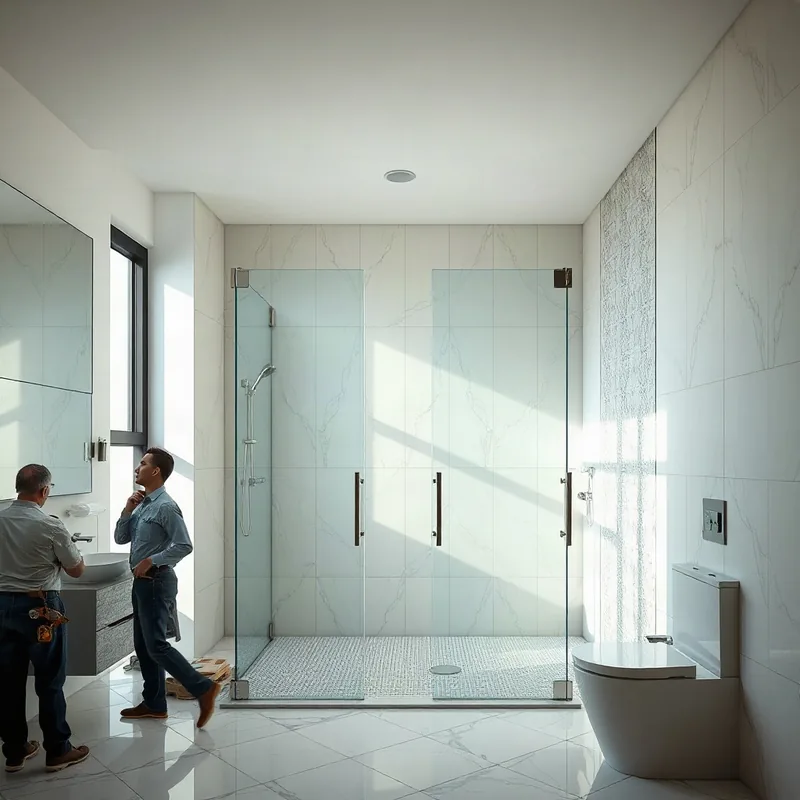
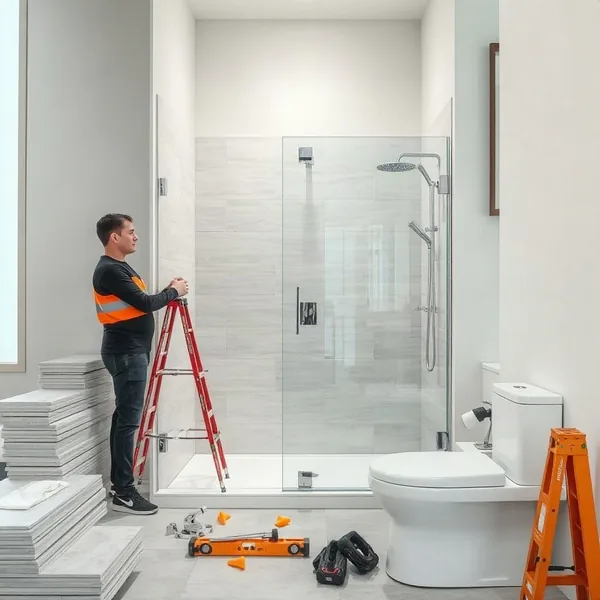
Before the fitting crew arrives, a site survey has already confirmed wall type, anchor positions, and exact panel dimensions — so installation day is execution, not problem-solving.
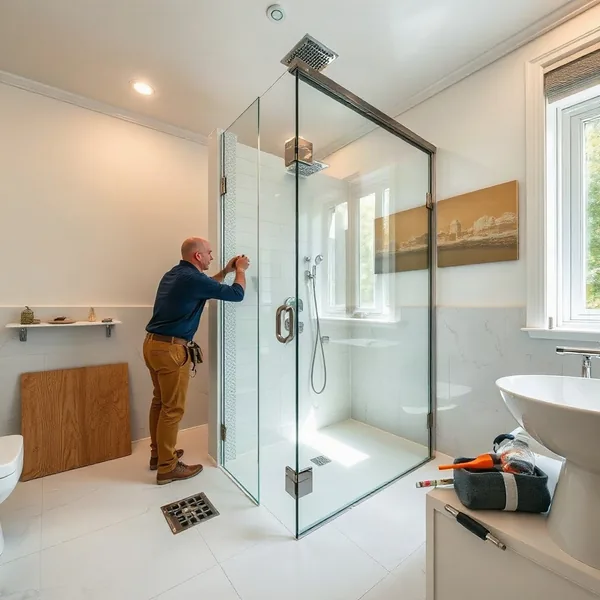
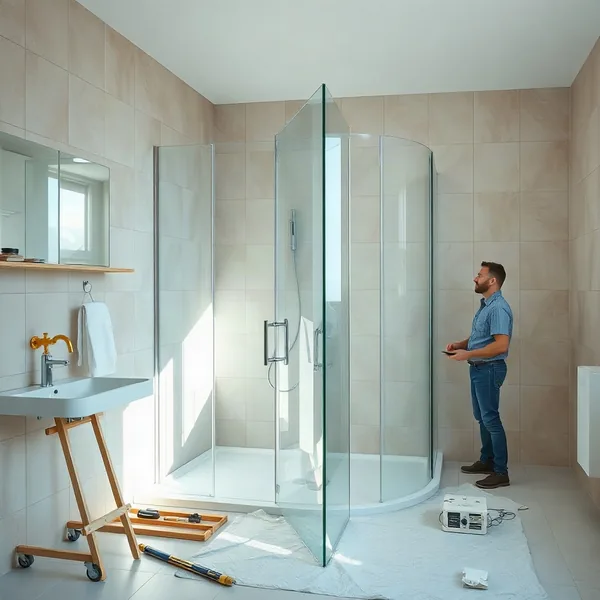
Glass delivery is coordinated to arrive the same morning; panels travel flat in protective cradles to avoid edge chips. The two-person fitting crew starts by mounting the wall channel and checking its level twice before drilling. Panels are lifted into position, hinges torqued to spec, and each joint sealed in sequence. For a standard three-panel enclosure, the entire process takes 3–6 hours. We leave the site clean and advise a 24-hour waiting period before the shower is used, allowing all silicone joints to cure fully. If your building requires a Dubai Municipality No Objection Certificate, that paperwork must be resolved before we schedule fabrication.
05
Frameless Enclosure vs Partition: Picking the Right Option
partitionswing doorsliding door
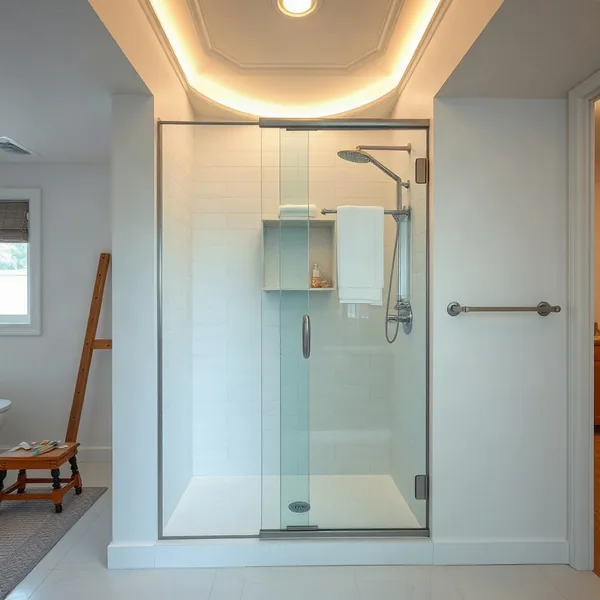
A frameless shower enclosure fully encloses a wet zone and keeps water contained — it's a functional boundary with a door, whether that's a swing door on pivot hinges or a sliding door running on a top rail.
A glass partition, by contrast, divides space without sealing it: it separates a bathroom area visually but isn't designed to stop water spread across the floor. If your bathroom has a proper shower tray or tiled wet zone, an enclosure is the right choice. If you simply want to divide a larger bathroom or dressing area, a partition panel does the job at lower cost and without drainage-slope requirements. A door-only solution — one swinging or sliding panel with no side panels — suits walk-in alcoves where two or three walls already exist. We'll recommend the right configuration after measuring your space.