01
Why Dubai's Climate Demands Different Window Specifications
Between June and September, ambient temperatures in Dubai regularly exceed 45°C, pushing exposed aluminum frame surfaces considerably higher.
Standard alloys and sealants engineered for temperate climates begin to warp and delaminate under these repeated thermal expansion cycles, creating gaps that compromise weathersealing within a season or two. We specify high-grade aluminum with thermal-break profiles and elastomeric sealants rated for extreme heat as a baseline — not an upgrade. Dubai's humidity also spikes above 90% on summer nights, so every fixing we use is stainless grade to prevent corrosion where condensation accumulates on inner frame channels.
02
Hard Water, Dust Storms, and Glass Coating Choices
Dubai's water supply from DEWA is desalinated seawater carrying 500–700 mg/L of dissolved solids, which etches untreated glass quickly and leaves visible mineral scale within weeks of installation.
We apply hydrophobic nano-coating during fabrication rather than on-site, because factory-bonded coatings outlast post-installation treatments by a significant margin. Shamal wind events — concentrated between May and July — drive fine silica particulate across every exposed surface. For casement windows facing outdoor areas, we specify scratch-resistant glazing and sealed frame joints that prevent grit from working into hinge mechanisms and weatherseals over successive dust cycles.
03
Frame and Hardware Specifications for Hinged Doors
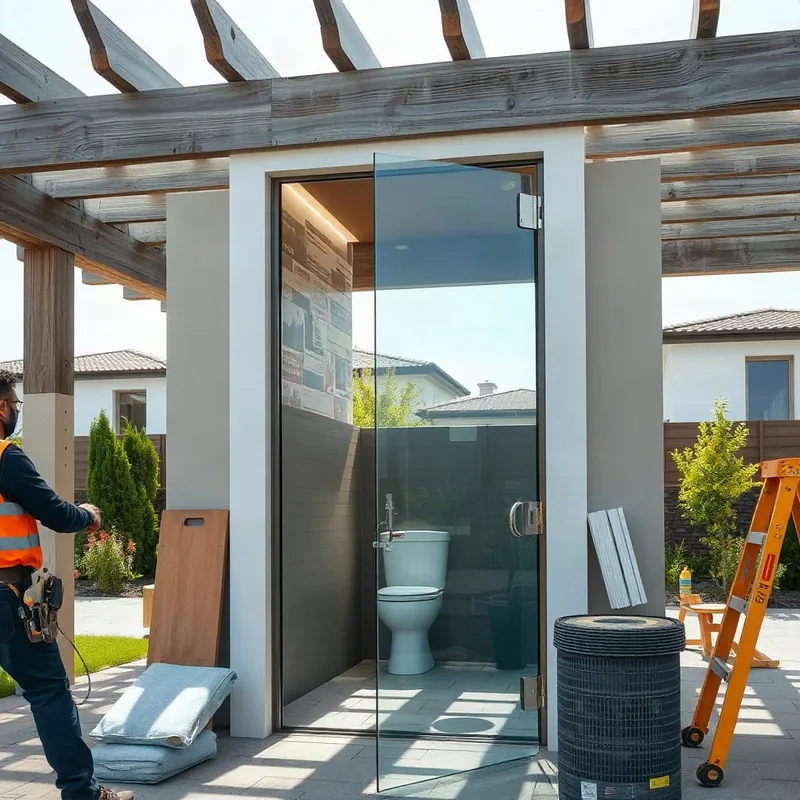
A hinged door used in Dubai's outdoor-adjacent spaces — connecting a villa interior to a terrace pergola, for instance — faces the same thermal and humidity stresses as the pergola structure itself.
We size door frames with sufficient aluminum wall thickness to absorb expansion without binding, and we select multi-point locking hardware with stainless internals. Friction stay mechanisms on casement sashes are calibrated to the glass weight and panel size so they hold position reliably in the cross-ventilation scenarios most Dubai villa layouts create. For glass panels exceeding 1.2 m in any dimension, we default to laminated safety glass as the base specification.
04
Dubai Municipality Permits for Window and Door Projects
Any modification to a building's envelope that enlarges or repositions a window or door opening in Dubai requires a No Objection Certificate and a building permit from Dubai Municipality.
A licensed engineering consultant must produce stamped structural drawings before we can begin fabrication on those units. We coordinate the permit submission process for clients and work with approved consultants to keep lead times as short as possible — typically 2–6 weeks for permit approval depending on project complexity. Like-for-like replacements within identical opening dimensions carry lower administrative burden, but we always advise confirming the exact scope with Dubai Municipality's Building Department before committing to a programme.
05
Integration with Pergolas, Gazebos, and Shower Glass
Because Emirates Pergola & Glass Works installs the full range of outdoor structures and interior glazing, casement windows and hinged doors rarely exist in isolation on a project.
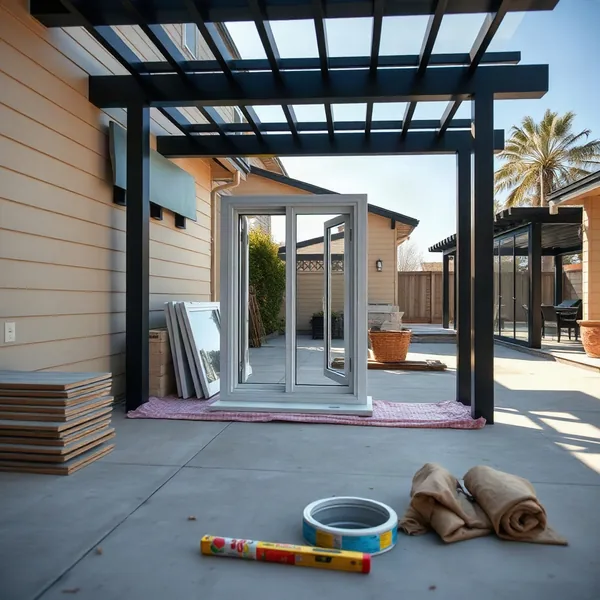
A glazed hinged door that opens from a living room to a louvered pergola needs its threshold, weatherseal, and hinge specification to account for the outdoor microclimate the pergola creates — including increased moisture during rain events and radiant heat from the aluminum pergola roof above. Similarly, internal casement windows adjacent to shower glass enclosures share our stainless-fixing and coated-glass standards, keeping the entire project specification consistent rather than mixing material grades between trades.