01
What Makes a Gazebo Suitable for BBQ and Grill Use?
fire-resistant roofingventilation gapgrill placement
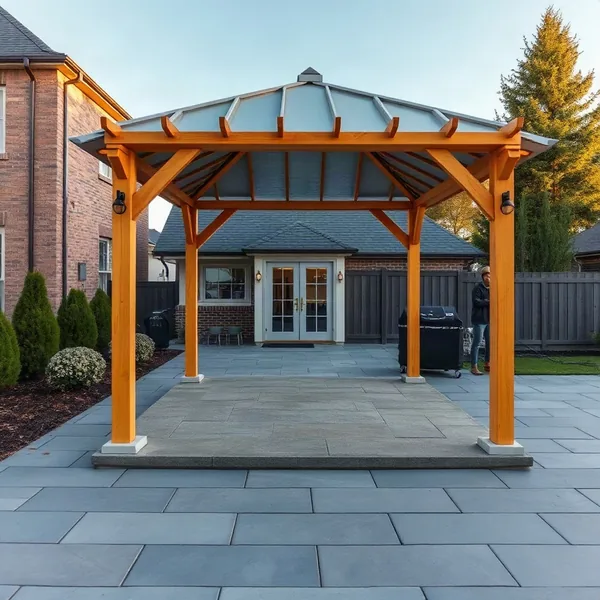
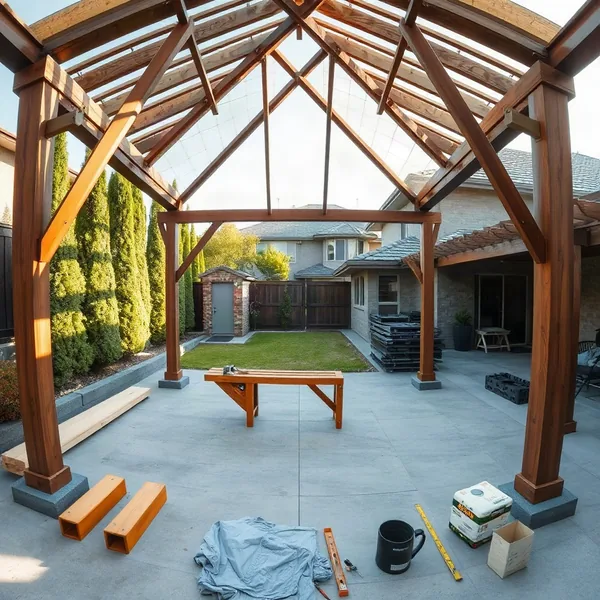
A bbq gazebo suitable for open-flame cooking is one built from non-combustible materials with deliberate airflow engineered into its roof plane — that distinction separates barbecue grill gazebos from standard decorative garden shelters.
The critical elements are fire-resistant roofing (rated non-combustible per international building standards), a minimum ventilation gap of 150–200 mm between roof panels and any side wall, and careful grill placement at least 1 metre from every structural post. Dubai's summer ambient temperatures regularly exceed 45 °C, which means materials must also tolerate extreme thermal expansion; standard temperate-climate sealants and coatings delaminate under those conditions. Barbecue gazebos here commonly use powder-coated aluminum frames with louvered or vented ridge panels, while flooring beneath the grill station is concrete or porcelain tile — never timber decking directly under live flame.
02
Metal Roof Grill Gazebos: Why They're Safer Near Open Flame
steel roof panelspark resistanceheat clearance
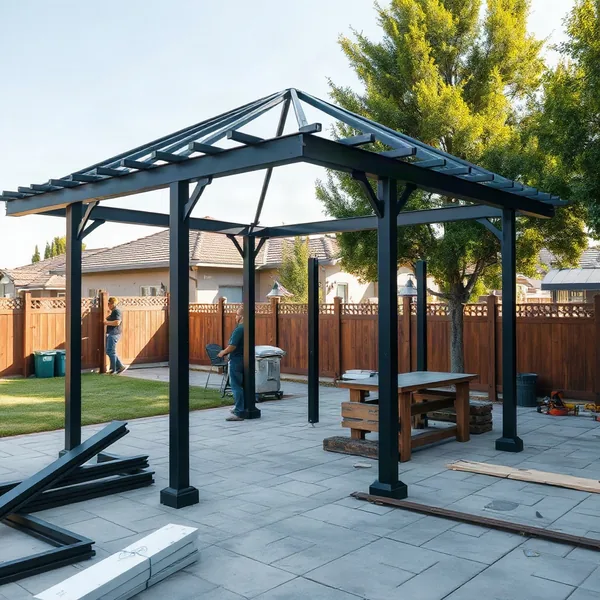
Grill gazebos with metal roof systems are the safest enclosure choice near an open flame because a steel roof panel is non-combustible, will not absorb grease vapour, and deflects radiant heat rather than trapping it.
Spark resistance is the defining advantage over polycarbonate or fabric: a stray charcoal ember that contacts a powder-coated steel panel simply cools and drops, whereas it can ignite or melt softer materials. Heat clearance — the vertical distance between the grill grate and the roof underside — should be at least 2.4 metres, and our metal-roofed structures are designed with a 2.7-metre interior height as standard. During Dubai's Shamal season (May to July), fine silica dust abrades uncoated surfaces; standing-seam steel roof profiles seal out particulate while remaining easy to hose down after a dust event. Installed cost for a steel-roofed BBQ gazebo in Dubai typically starts from AED 14,000 for a 3 m × 4 m footprint.
03
BBQ Shade and Awning Options for Outdoor Grilling
shade clothawning framesmoke ventilation
A bbq awning or grilling awning offers a lower-cost alternative to a fixed gazebo, but the choice carries meaningful safety trade-offs that every client should understand before specifying outdoor grill shade.
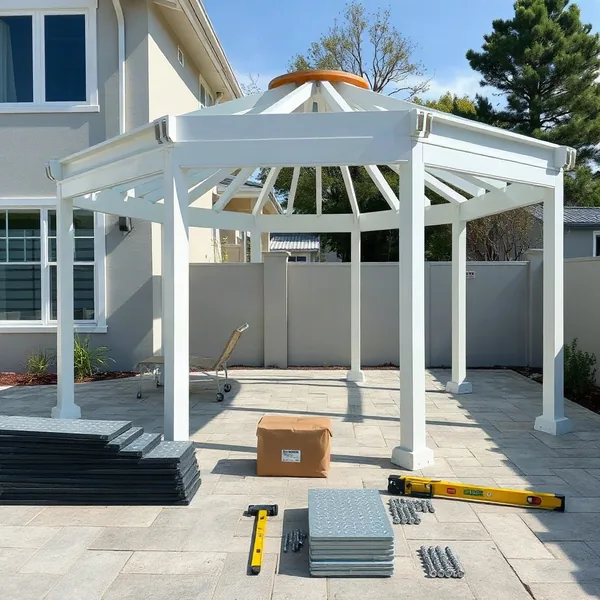
Shade cloth and fabric awning frames are categorically unsuitable directly above a live-flame grill — most commercial shade cloth ignites or melts between 150 °C and 260 °C, and pooled smoke beneath a closed barbecue awning creates a carbon monoxide risk without adequate smoke ventilation on all sides. Retractable barbecue grill awnings work acceptably as a bbq sun shade for adjacent seating zones — 2 metres or more from the grill itself — where they block Dubai's intense afternoon sun without sitting in the direct smoke and heat column. For the cooking zone itself, we recommend transitioning to a fixed metal or louvered grillcanopy rather than relying on fabric as outdoor bbq shade above the burners. A side-mounted barbecue grill shade panel on a fixed arm can complement a metal-roofed structure by shading guests seated perpendicular to the grill.
04
Choosing the Right Size Gazebo for Your Grill Area
grill station sizeseating clearancecounter space
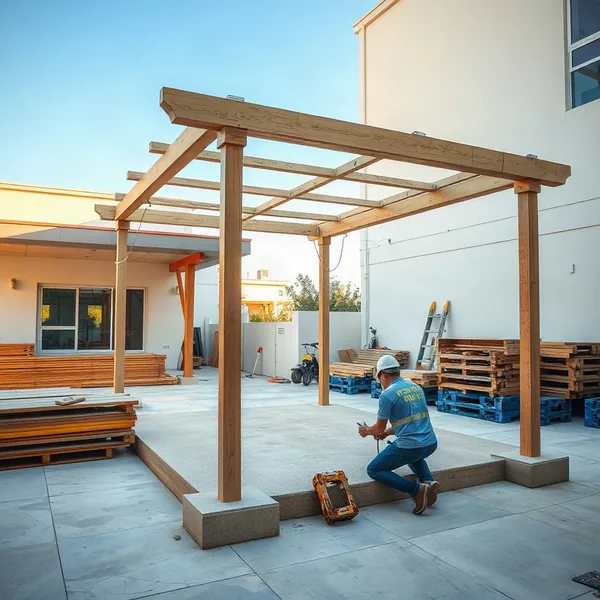
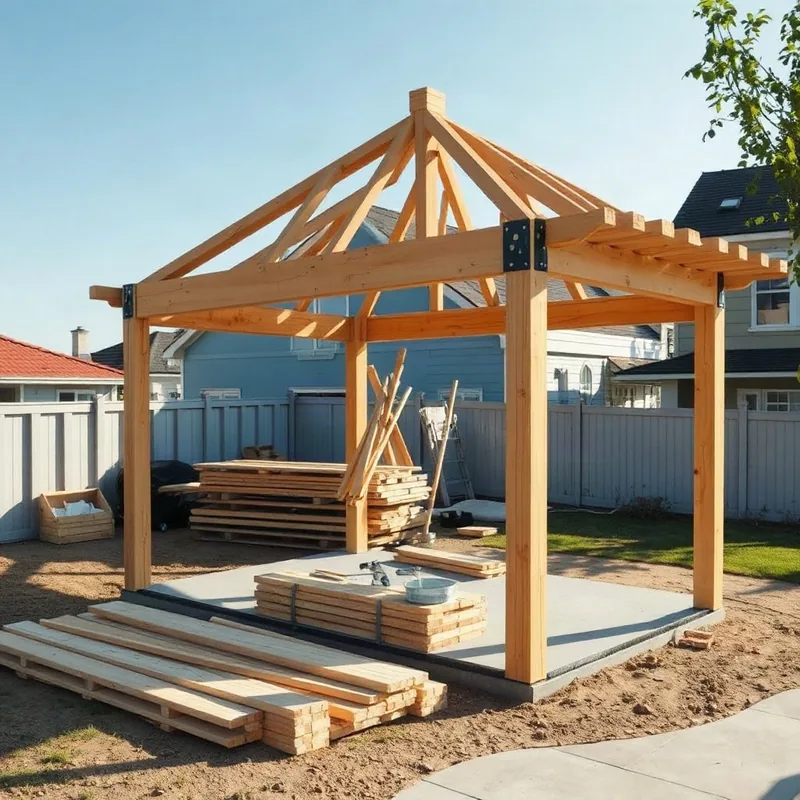
Gazebos for grills are sized around three fixed measurements: grill station size, seating clearance, and counter space — and getting all three right prevents the most common layout complaint, which is a cooking area that feels cramped the moment guests gather. A standard freestanding or built-in grill unit runs 60–90 cm wide; the covered footprint should extend at least 1.5 metres beyond the grill on every open side, making a 3 m × 4 m structure the practical minimum for a single grill with two people working. Seating clearance behind the cook needs at least 1.8 metres of clear floor for chairs and movement. Counter space — a side prep surface of 60–90 cm — adds roughly 1 metre to one dimension. In Dubai, structures above 10 m² trigger Dubai Municipality NOC requirements, so confirming the final footprint with us early avoids mid-design permit surprises. Footings must also account for the fine aeolian sand and sabkha soil common across Dubai villa zones, requiring engineered concrete pads rather than simple post spikes.