01
Why Dubai's Climate Demands More From Sliding Systems
Ambient temperatures in Dubai regularly exceed 45 °C between June and September, pushing exposed aluminum frame surfaces well beyond that figure.
Standard temperate-climate alloys expand and contract at rates that crack sealant beads and distort track alignment within a single summer. We specify thermally broken aluminum alloy frames for every sliding door and window installation we undertake here — not as an upgrade, but as the baseline. Dubai's humidity also spikes above 90 percent on summer nights, cycling condensation through frame joints repeatedly. Marine-grade stainless fixings at every contact point prevent the corrosion that mild-steel hardware develops within months in those conditions.
02
Shamal Dust and Scratch-Resistant Glazing
Between May and July, Shamal wind events carry fine silica particulate that settles across every exposed surface in Dubai — glass panels, track channels, and frame joints included.
Abrasive grit in an unprotected track scores roller wheels within a season, causing the heavy sliding resistance homeowners often blame on poor installation. We specify scratch-resistant glazing on any door or window facing a garden, terrace, or open elevation, and we seal frame joints to reduce dust ingress. Post-Shamal track cleaning is something we include in our annual service contracts because one event can deposit enough grit to damage rollers if the channel isn't cleared before the door is operated again.
03
Hard Water, Nano-Coating, and Glass Longevity
Dubai's water supply arrives from desalination plants with total dissolved solids typically between 500 and 700 mg/L, as reported by Dubai Electricity and Water Authority.
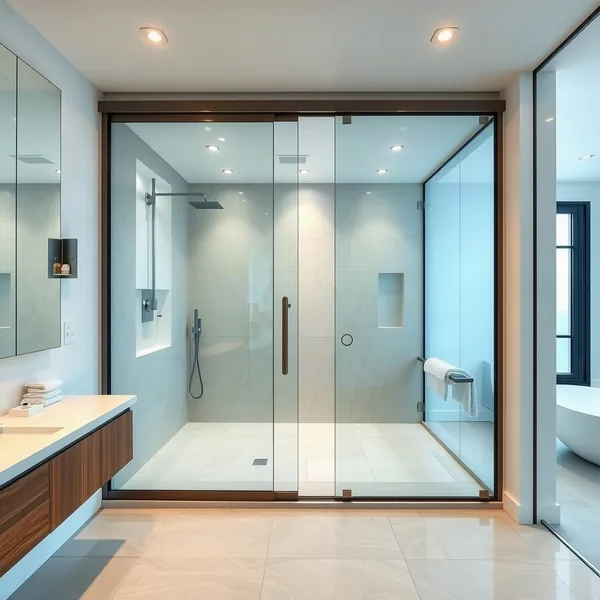
On untreated glass, that mineral load leaves visible white-scale deposits within weeks of regular water contact — a particular problem for sliding windows adjacent to irrigation zones or shower-side glazed panels. We apply a hydrophobic nano-coating to all glass surfaces at the point of installation, which causes water to bead and carry minerals away rather than evaporating and leaving residue. The coating needs reapplication roughly every 18 to 24 months; we provide written descaling advice so clients can maintain appearance between service visits.
04
Permits for Structural Modifications in Dubai
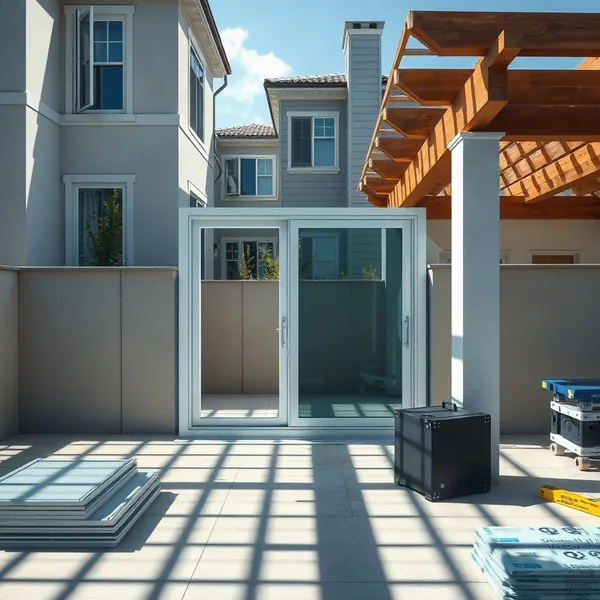
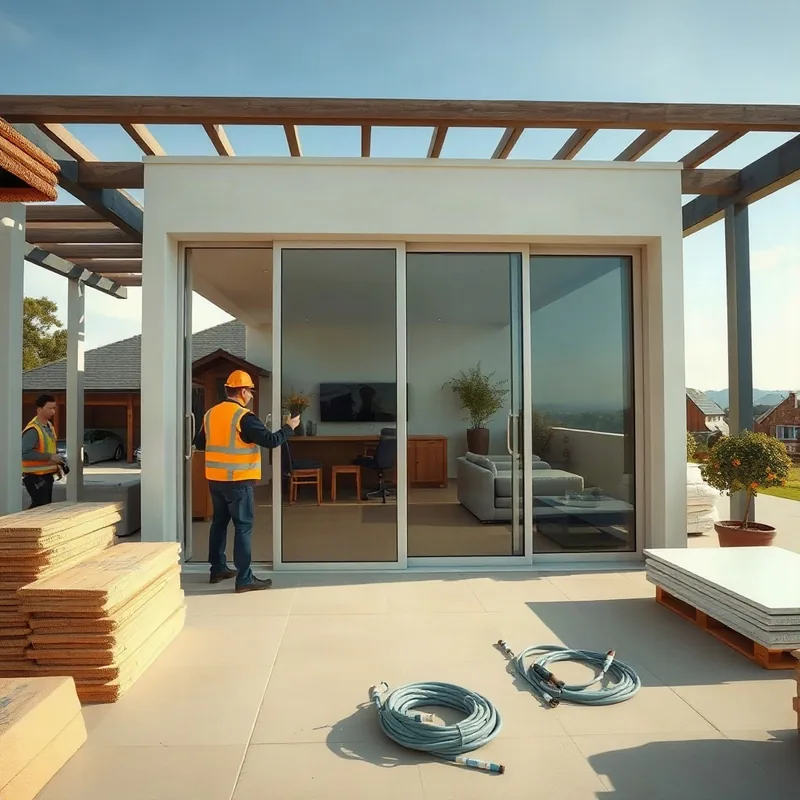
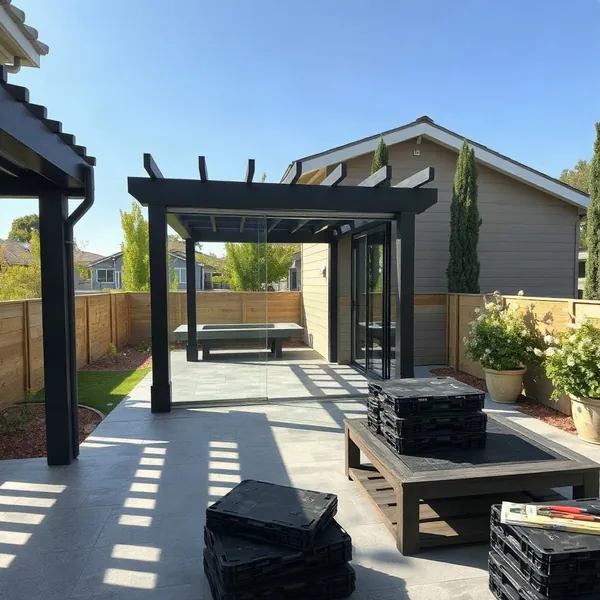
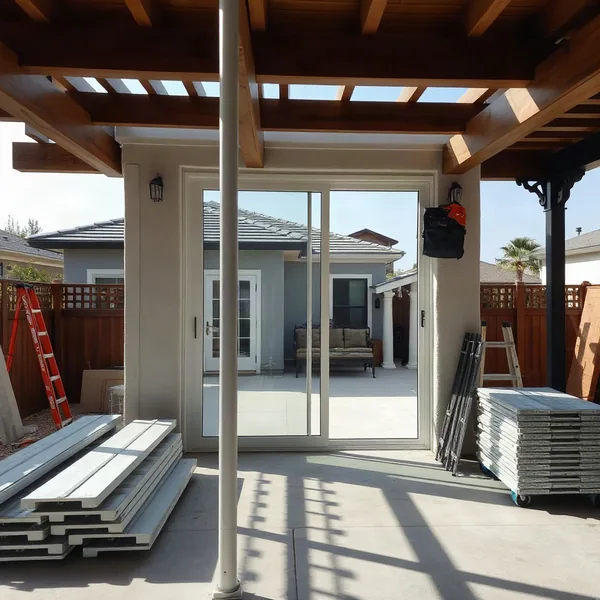
Enlarging an existing opening, adding a new glazed partition, or integrating sliding doors into a pergola enclosure all constitute structural additions under Dubai Municipality rules.
Each of those scenarios requires a No Objection Certificate and building permit before fabrication begins, along with stamped engineering drawings from a licensed consultant. We coordinate that process on behalf of clients, but it does add two to six weeks to the project timeline — something to account for in any renovation schedule. Like-for-like replacements within an unchanged structural opening generally don't trigger a full permit, so the first step in any project is establishing exactly what scope of work is planned.
05
Frame and Glass Specifications We Use
Every sliding system we install is built around four non-negotiable specifications for Dubai conditions.
First, thermally broken aluminum alloy frames — the internal polyamide break stops heat transfer that warps standard frames. Second, Low-E double-glazed or laminated safety glass to manage solar heat gain through large openings. Third, stainless-steel or marine-grade hardware at all fixing points. Fourth, hydrophobic nano-coating on all glass faces. For terrace-facing installations, we use thicker laminated panels that absorb impact without shattering, which also adds acoustic damping from outdoor noise. Track system quality matters too — we use heavy-duty roller assemblies rated for panel weights that Dubai's larger villa openings commonly require.
06
Maintenance Advice We Give Every Client
Roller and track maintenance every three to four months using silicone-based lubricant keeps sliding systems operating smoothly; oil-based products attract fine desert dust and accelerate wear.
After any Shamal event, the track channel should be vacuumed before the door is moved — operating the panel over trapped grit is how rollers fail prematurely. On the glass itself, a diluted white-vinegar solution or commercial descaler used monthly prevents mineral deposits from bonding permanently to the surface. Rubber seals around frames should be inspected before each summer; Dubai's UV exposure and consistent heat above 45 °C harden and crack seals within two to three years, and failed seals allow dust infiltration that raises air-conditioning loads noticeably.