01
What Makes a Partition 'Frameless'?
10mm tempered glassminimal hardwareclip fittings
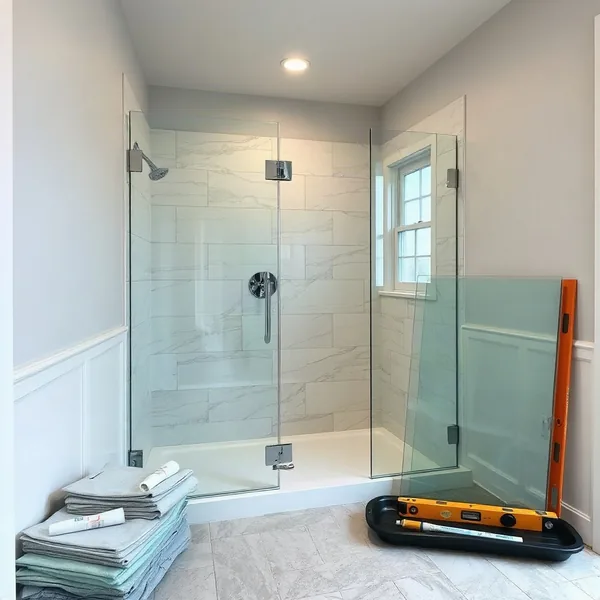
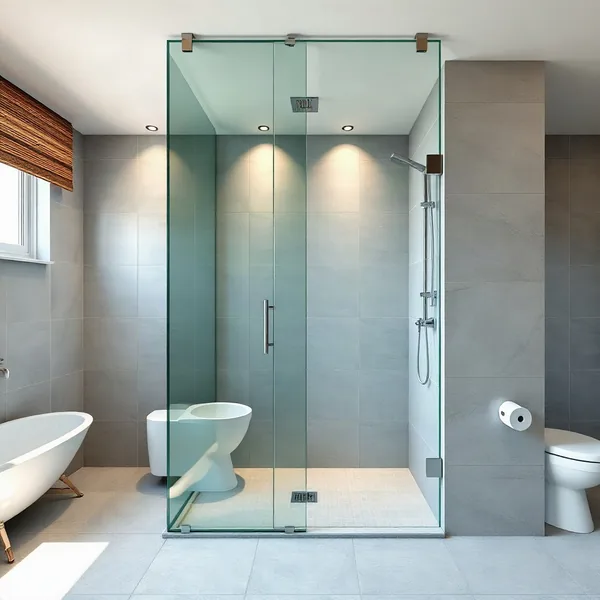
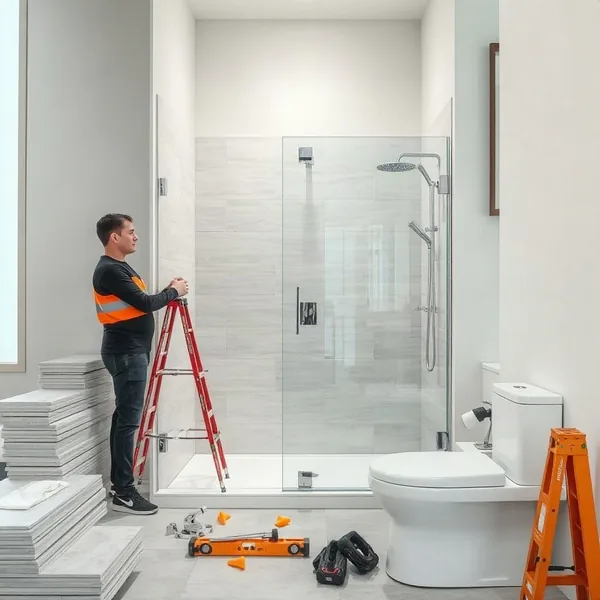
A frameless shower enclosure is defined by the absence of a surrounding metal perimeter: instead of wrapping every edge in a profile, the glass carries its own structural load through sheer thickness.
That means the panels must be 10mm tempered glass at minimum — and 12mm for any hinged door or unsupported span wider than 900mm. Rather than a continuous frame, the system relies on wall-mounted clip fittings, point-fixed hinges, and small floor or ceiling channels to hold each panel in alignment. With minimal hardware visible, the result is an enclosure that reads almost as open space, letting tile work and bathroom design show through rather than being boxed in by aluminium extrusions.
02
How Much Does a Frameless Glass Partition Cost in Dubai?
glass thicknesspanel sizelabour
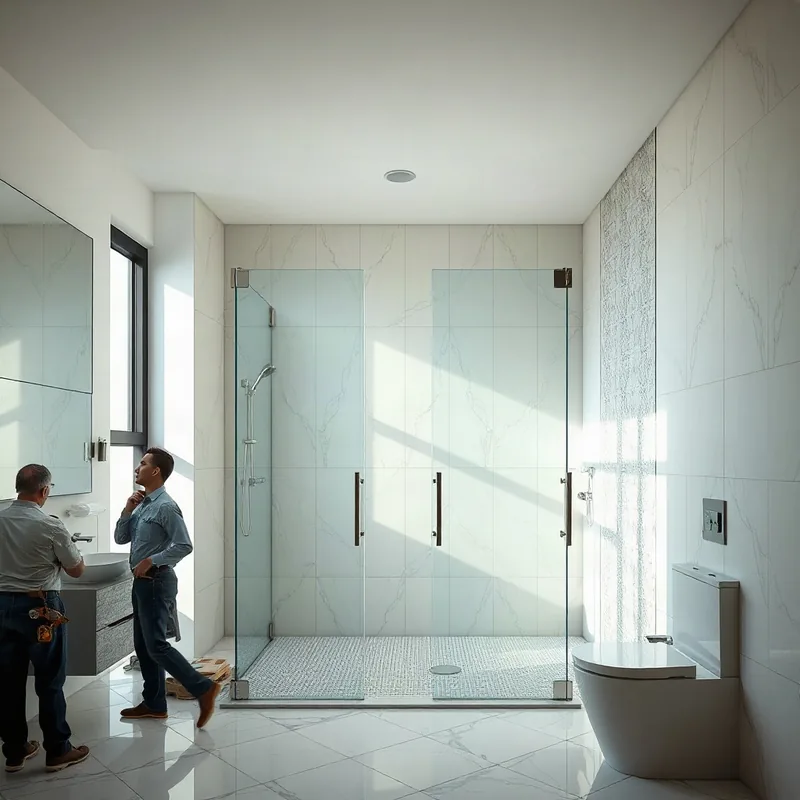
No honest answer can skip the site survey, because price follows the specifics of your bathroom rather than a catalogue rate.
That said, the three variables that move cost most are glass thickness, panel size, and labour complexity. A standard single fixed panel plus one hinged door in 10mm tempered glass typically starts from AED 1,800–2,500 for a straightforward rectangular layout. Adding a return panel, upgrading to 12mm glass for a larger span, or specifying a custom panel size — anything the fabricator must template rather than cut to standard — pushes the figure higher. A frameless shower glass partition with multiple panels in a wet-room configuration can run AED 4,000–7,000 or more. Request an itemised quote that separates glass thickness, hardware, and labour so comparisons between suppliers are meaningful.
03
Will Dubai's Water Leave Marks on the Glass?
hard watermineral depositsqueegee
Yes — and faster than most homeowners expect.
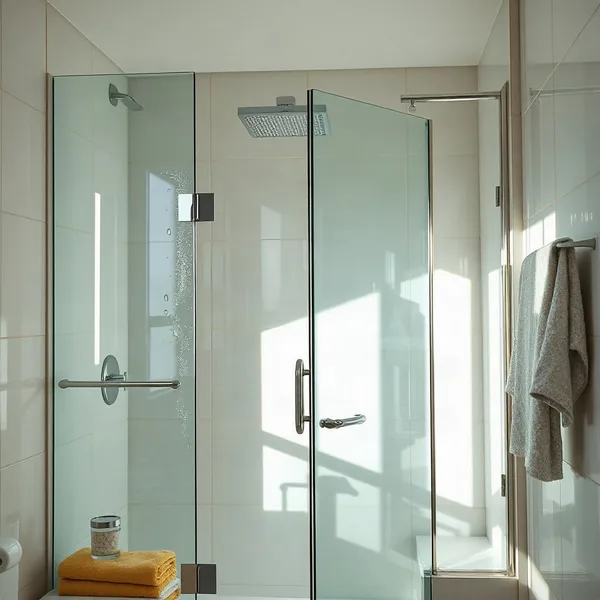
Dubai Electricity and Water Authority supplies desalinated seawater with total dissolved solids typically between 500 and 700 mg/L. Every drop that dries on an untreated surface leaves behind a calcium and magnesium mineral deposit that, over weeks, etches into the glass and creates a permanent haze no standard cleaner can reverse. The most effective defence is a hydrophobic nano-coating applied at installation: water beads and runs off before it can dry. Beyond that, the daily routine is simple — draw a squeegee across each panel after every shower, and descale monthly with a pH-neutral mineral remover. Skipping the squeegee for even a few weeks in a Dubai bathroom is enough for hard water spotting to become visible.
04
Frameless vs Framed: Which Suits Your Bathroom?
aluminum framecleaningresale value
The core difference is the aluminum frame that surrounds every panel in a framed system.
That frame adds rigidity — framed enclosures can use thinner 5mm or 6mm glass — but it also creates horizontal ledges and corner joints where soap scum and hard-water residue collect and are difficult to clean thoroughly. Frameless panels, having no frame to trap debris, are faster to wipe down and stay looking clean with less effort. On resale value, frameless glass reads as a premium finish that buyers notice; framed enclosures, particularly those with dated silver or gold extrusions, can date a bathroom quickly. The trade-off is cost: frameless glass is heavier, the hardware is more expensive, and installation requires more precise drilling. For a long-term Dubai residence, the cleaning advantage alone usually justifies the difference.
05
Getting Your Measurement and Installation Booked
site surveytemplatesilicone seal
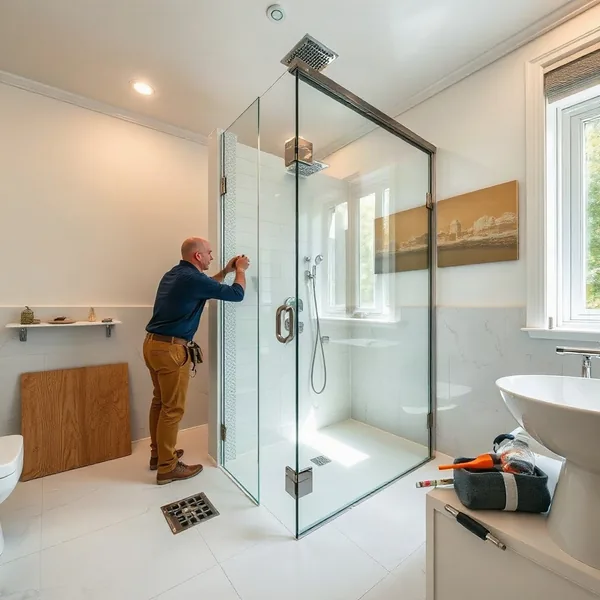
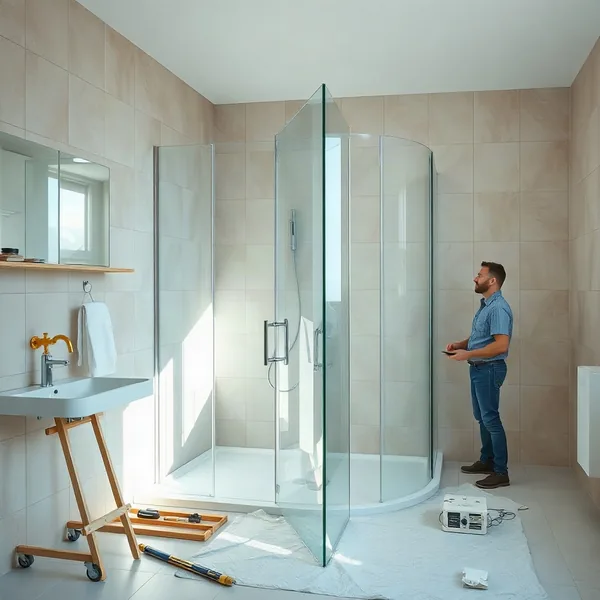
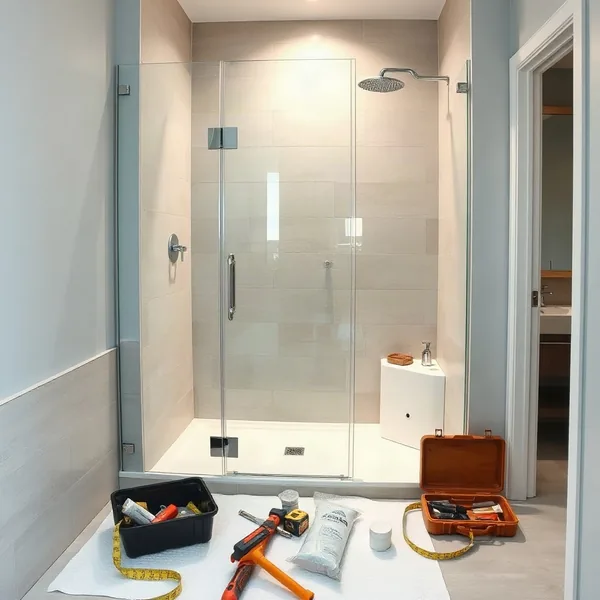
The process begins with a site survey, not a quote over the phone, because wall plumb, tile thickness, and the curing state of grout all affect how we drill and position anchors.
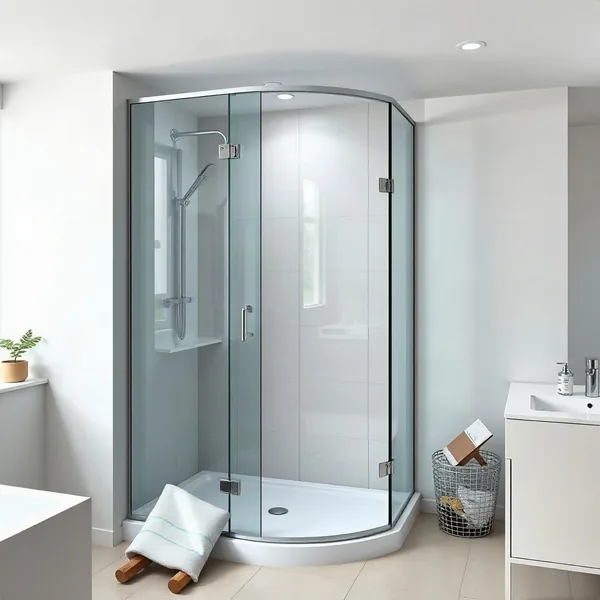
Once we have accurate dimensions, a physical template is made for any non-rectangular or curved opening before glass is cut — an extra step that eliminates costly re-cuts. Fabrication of 10mm or 12mm tempered panels typically takes five to ten working days depending on current workshop load. Installation in a ready, fully tiled bathroom generally runs one to two days. The final step is applying silicone sealant along every wall joint and the floor line, then leaving the enclosure untouched for 24–48 hours to cure fully before water contacts the seals.