01
What a Multi Leaf Sliding Door System Actually Is
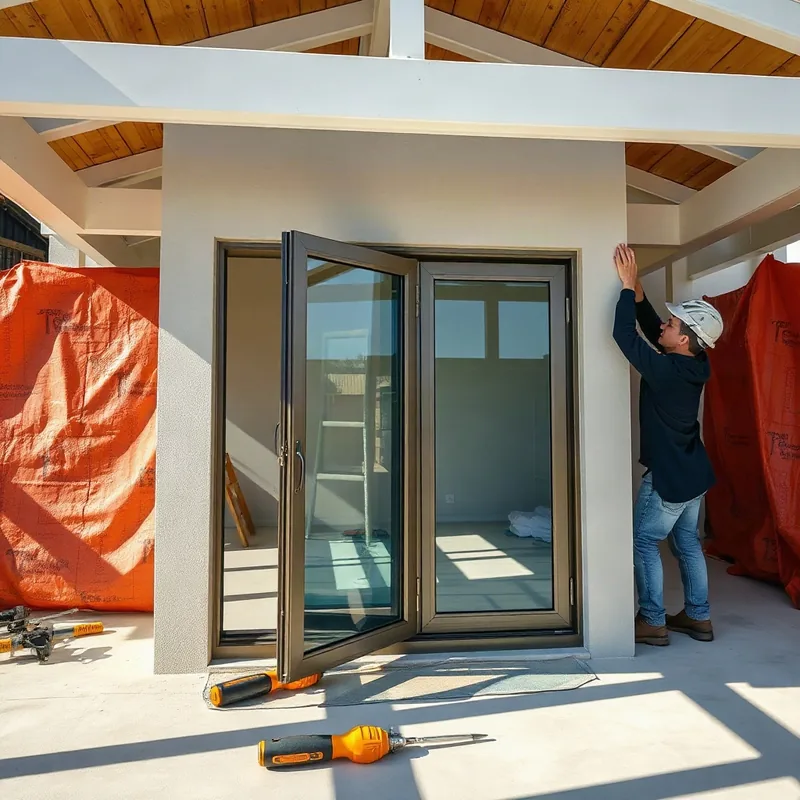
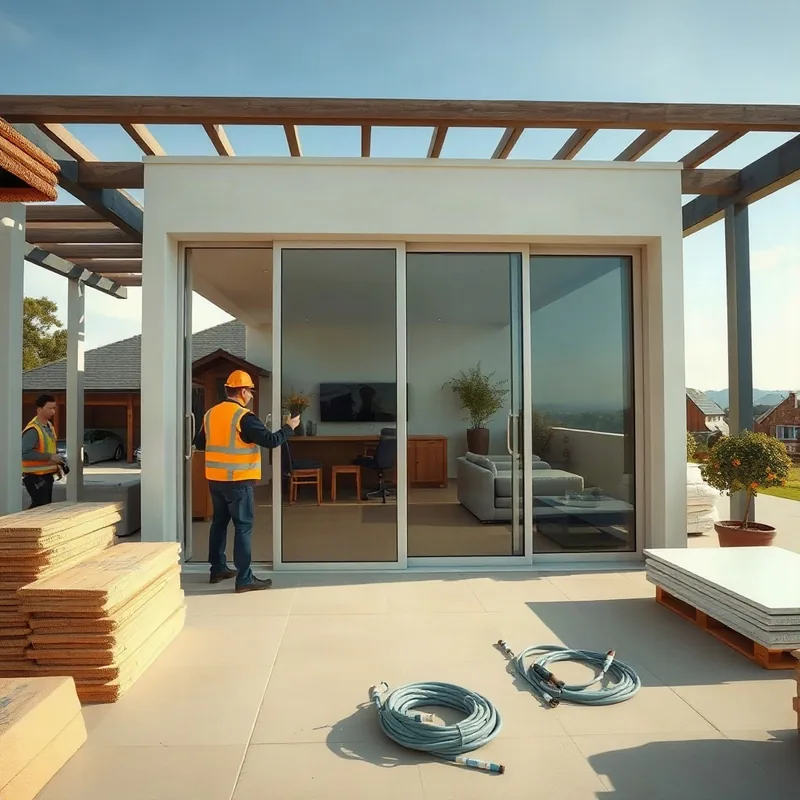
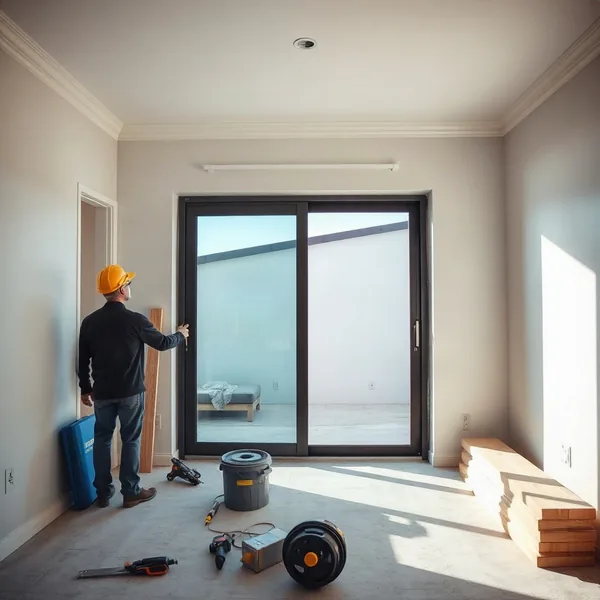
A multi leaf sliding door is a glazed panel assembly of three or more independently running panels that share a common top or floor track, allowing the entire opening — widths from 2.4 m up to 12 m or more — to be cleared in one continuous motion. Unlike a standard two-panel slider, a multi leaf system stacks all panels to one side or splits them to both ends, leaving the aperture unobstructed. This makes it the preferred solution for connecting a Dubai villa's interior to a garden, pool deck, or pergola enclosure without the post-and-panel interruptions of a bi-fold or fixed-frame system.
02
Frame and Glass Specifications for Dubai's Heat
Dubai's ambient air regularly exceeds 45 °C between June and September, and exposed aluminum frame surfaces can climb well beyond that.
We specify 6063-T5 thermal-break aluminum profiles — not standard 6060 — because the polyamide barrier within the frame section reduces heat conduction that would otherwise distort the panel geometry and stress the glass edge seals. Glass is tempered 8 mm or 10 mm low-E with a solar heat gain coefficient below 0.30. Every panel leaves our workshop with a factory-applied hydrophobic nano-coating because Dubai's desalinated DEWA supply, which carries 500–700 mg/L of dissolved solids, builds mineral scale rapidly on untreated surfaces.
03
Track Systems and Floor Guide Installation
The sliding door floor guide installation is one of the details that separates a long-lasting system from one that jams within a season.
We use recessed stainless-steel bottom tracks set flush with the finished floor, keeping the guide profile below the walking surface and eliminating the trip hazard common with surface-mount channels. Top-hung multi panel door track systems carry the full panel weight through stainless rollers rated at 120 kg per leaf, which means the floor guide only provides lateral stability — it never bears load. In sabkha-affected zones where ground-level fixings are required, anchor bolts are hot-dip galvanized and set into engineered concrete pads, not directly into the native sand.
04
Frameless Glass Panels and Hardware Selection
Frameless sliding glass door panels use 12 mm or 15 mm fully tempered monolithic glass — or 10.10 laminated where building regulations require it — hung from top-mounted stainless clamp shoes rather than enclosed in an aluminum perimeter frame. The visual result is a near-uninterrupted glass wall when closed and complete transparency when open. Hardware — clamps, rollers, pull bars, and locks — is specified in 316-grade marine stainless steel rather than 304, because Dubai's summer humidity regularly spikes above 90 % overnight, producing condensation cycles that corrode lower-grade alloys within two to three years. We stock rollers rated for a 200,000-cycle service life under Dubai's operating temperatures.
05
Pergola and Villa Terrace Enclosures
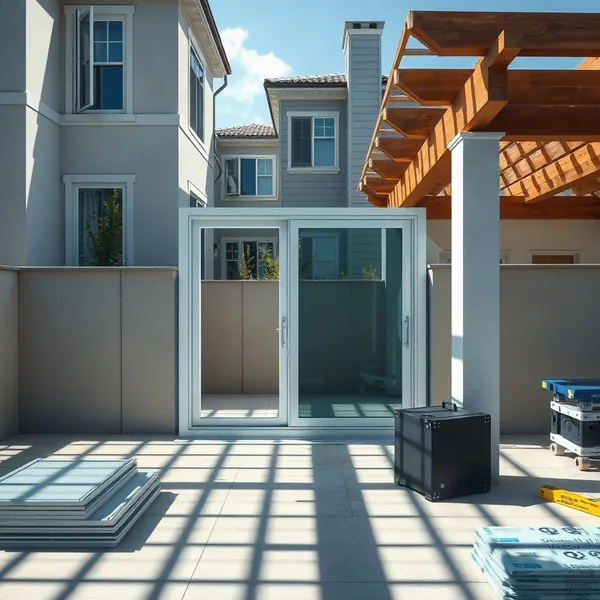
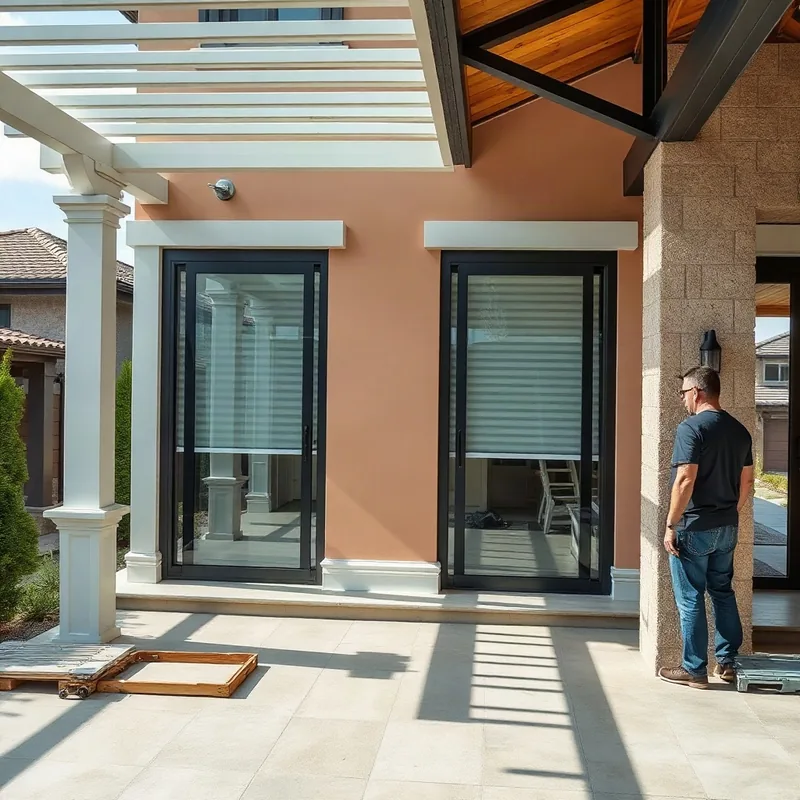
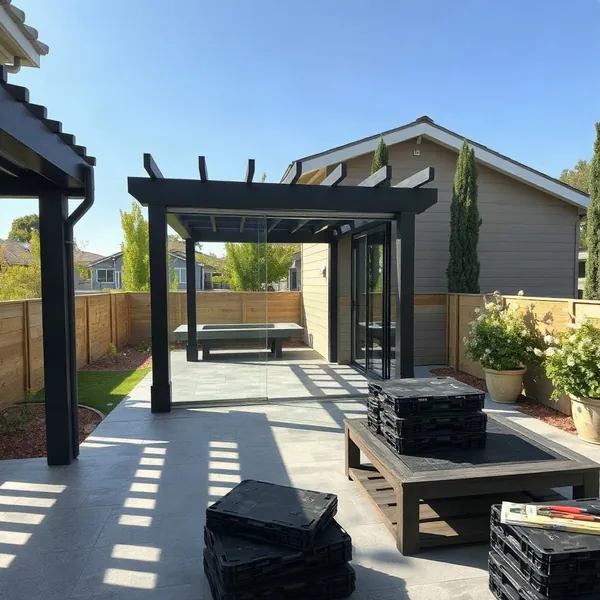
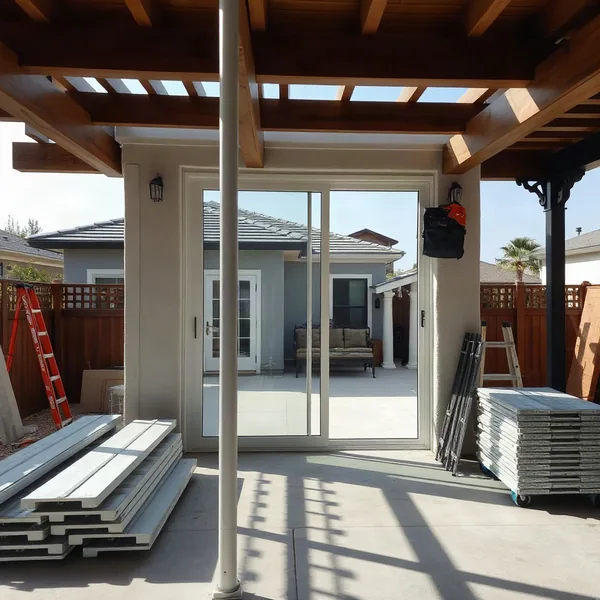
Multi leaf sliding doors are the most practical way to close a pergola or villa terrace because they retract fully to one side, preserving the open-air character that makes the structure worth having.
Most of our Dubai residential projects sit on villa terrace or rear garden footprints typical of compounds built between 2000 and 2015 — 4 m to 8 m wide openings that standard door configurations cannot span cleanly. Where the installation attaches to the existing building structure, Dubai Municipality requires a No Objection Certificate and a building permit backed by stamped engineering drawings before fabrication starts. We prepare that documentation in-house, which typically adds three to eight weeks to the timeline but means no surprises mid-project.
06
Shamal Dust Resistance and Ongoing Maintenance
Shamal wind events carry fine silica particulate across Dubai primarily between May and July, and that dust packs into roller channels and bearing races within hours of a storm.
We fit sealed roller cassettes — fully enclosed bearing units with rubber dust lips — rather than open-wheel rollers precisely because of this. Track profiles are designed with drainage slots so wind-driven dust and condensate flush out rather than accumulate. We also recommend quarterly track cleaning with a dry soft brush followed by a silicone-based lubricant rated above 120 °C; oil-based lubricants attract silica and accelerate wear. Scratch-resistant glazing with a surface hardness above 7H on the Mohs scale is standard on any panel facing an exposed outdoor elevation.