01
What Everyday Sliding Doors Actually Cover
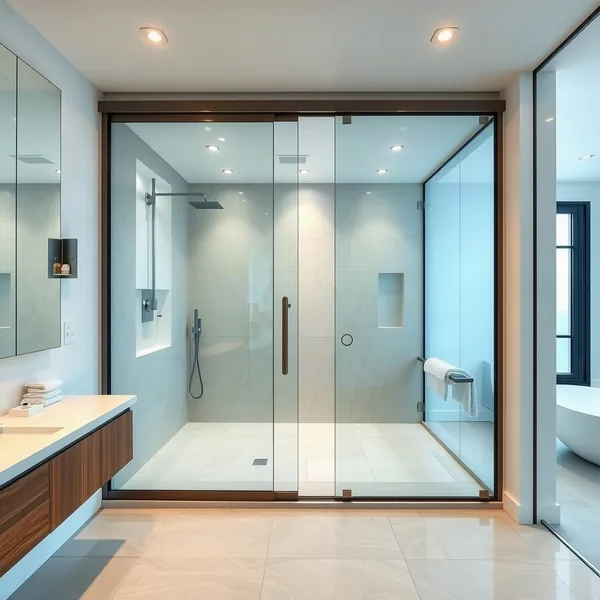
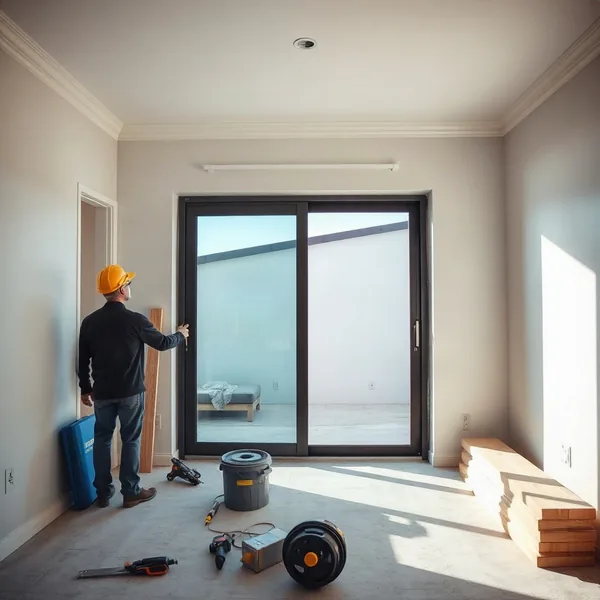
An everyday sliding door is a track-mounted panel system — single or double leaf — that replaces a hinged or fixed opening with a laterally moving glass or aluminum-clad unit.
In the context of our work at Emirates Pergola & Glass Works, these doors appear as villa balcony access panels, glazed pergola end walls, internal room dividers, and shopfront sliding entrances. They are not decorative additions; they are functional transitions between indoor and outdoor spaces that must perform reliably through Dubai's 45 °C summers and 90-percent-humidity mornings without warping, jamming, or losing their weather seal.
02
Frame and Track Specifications for Dubai's Climate
Standard sliding door hardware designed for temperate climates begins to fail in Dubai within one or two seasons.
Nylon rollers soften above 60 °C, rubber seals delaminate under sustained UV exposure, and mild-steel track fixings corrode rapidly when relative humidity spikes past 90 percent on summer mornings. We specify 6063-T5 or 6061-T6 anodized aluminum profiles for all frames, stainless-steel or reinforced nylon rollers rated above 80 °C, and EPDM seals with a temperature tolerance up to 120 °C. Tracks are powder-coated rather than painted to resist the abrasive silica dust that Shamal wind events deposit across exposed surfaces between May and July.
03
Glass Selection: Tempered, Low-Iron, and Coated Options
The glass panel in a sliding door carries as much specification weight as the frame.
Dubai's desalinated water supply — with total dissolved solids typically between 500 and 700 mg/L — leaves hard mineral scale on untreated glass surfaces quickly, and the repeated wetting-drying cycles caused by condensation accelerate etching. We use 8 mm or 10 mm tempered safety glass as standard, with low-iron options available where colour clarity matters in frameless systems. Every exterior-facing panel receives a hydrophobic nano-coating at installation, which reduces mineral adhesion and extends the interval between descaling treatments. For pergola-integrated sliding walls, we recommend tinted or low-e coated glass to reduce solar heat gain.
04
Dubai Municipality Permits for Sliding Door Installations
A like-for-like door replacement within an unchanged structural opening generally does not require a permit from Dubai Municipality.
The situation changes the moment the scope involves widening an opening, adding a new glazed wall to a villa terrace, or attaching a sliding partition to a load-bearing element. Those alterations require a No Objection Certificate and a building permit, backed by stamped engineering drawings from a licensed consultant. Our team identifies which category your project falls into during the initial site visit, and we handle permit submission coordination directly for jobs that need it. Clients should allow 2–6 weeks for permit clearance before fabrication can begin on affected scopes.
05
Sliding Doors as Part of Pergola and Gazebo Systems
A significant share of the sliding door work we carry out is not standalone — it connects directly to a pergola or gazebo structure we are building or have previously installed on the same property.
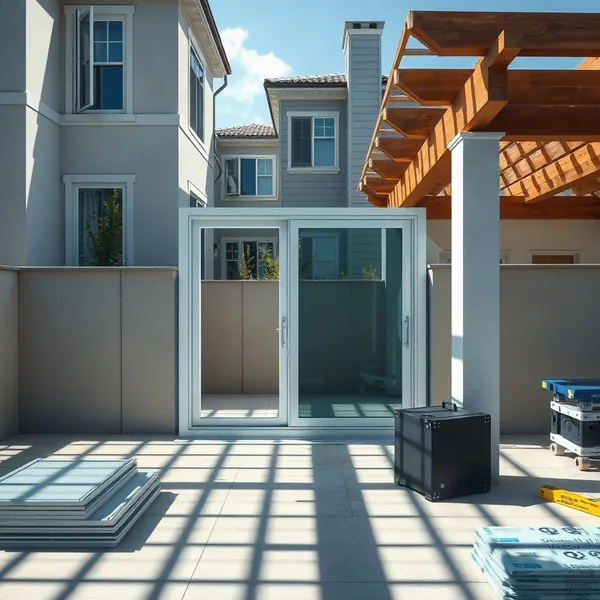
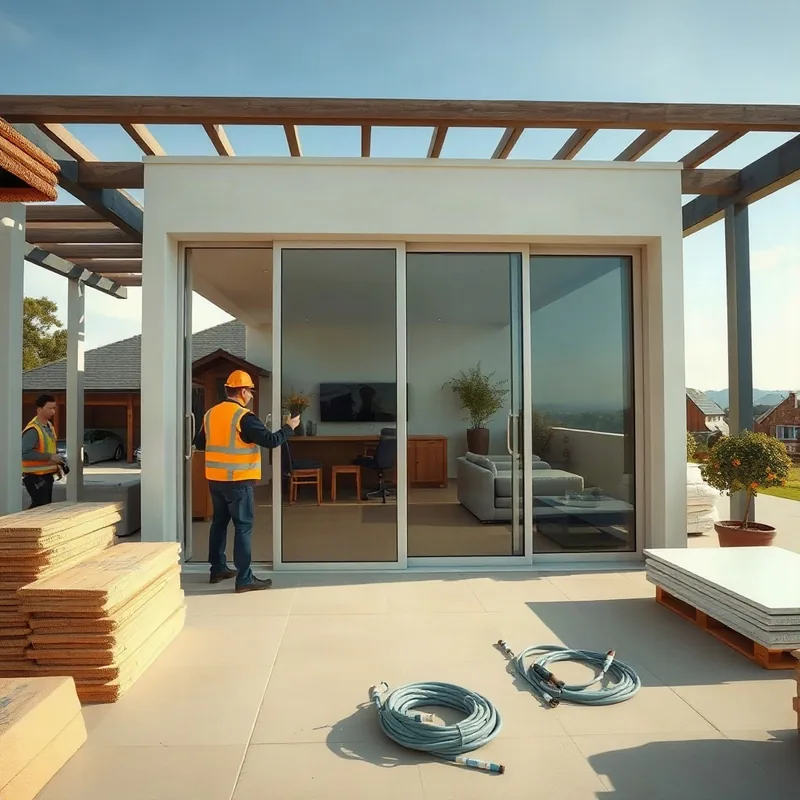
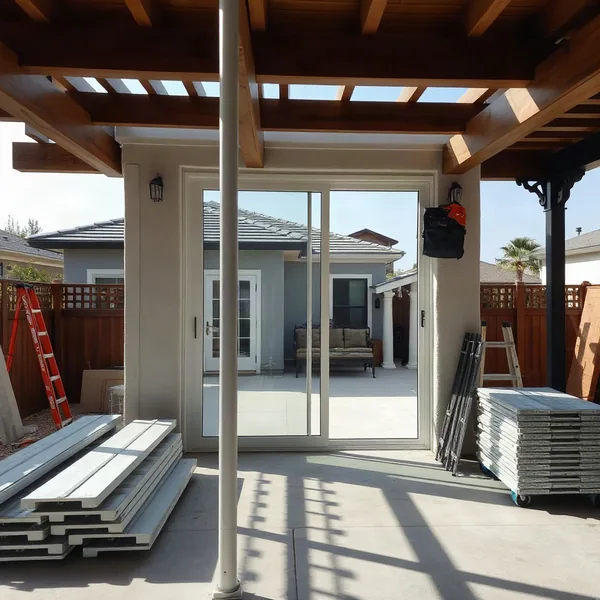
Villa terrace pergolas in Dubai are frequently enclosed with sliding glass end panels to create a shaded, weather-protected outdoor room that remains usable during Shamal dust events and the hottest months. In these configurations, the sliding door track is anchored to the pergola's aluminum post system, which itself sits on engineered concrete footings designed for Dubai's low-bearing aeolian sand and sabkha soil. The integration allows a single warranty to cover the full structure rather than splitting liability between separate contractors.
06
Roller and Hardware Replacement on Existing Systems
Not every call we receive is for a new installation.
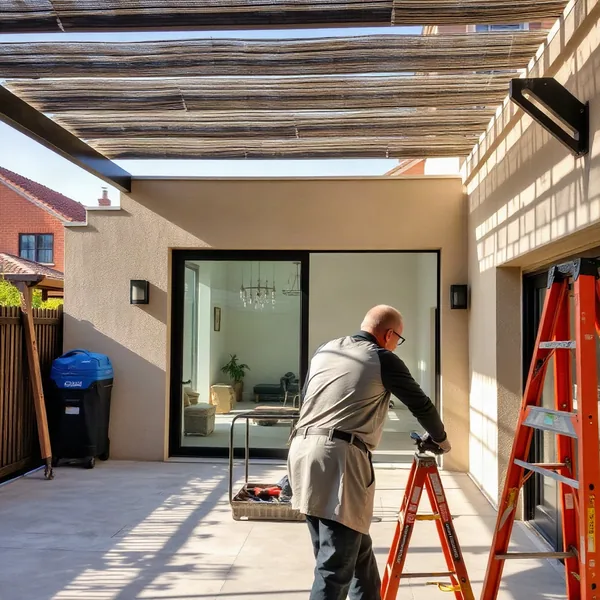
Older sliding doors — particularly those fitted in Dubai villas built between 2000 and 2015 — frequently develop alignment problems, stiff travel, or audible grinding from rollers worn down by mineral scale accumulation in the track channel. Sliding door roller replacement on a standard two-panel system takes 2–3 hours on site. We stock common roller cartridge sizes for aluminium sliding door track profiles from Schüco, Alumil, and generic Chinese-extrusion systems. Where the track itself is worn or corroded, we replace the full track assembly rather than patching it, because partial repairs on a corroded channel rarely hold beyond a single season in Dubai's environment.